
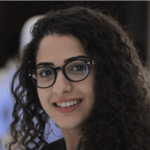
In late September 2026, Egyptian authorities arrested journalists working for the independent media platform Matsda2sh, in what may be one of the first and most alarming incidents of its kind in the history of modern Egyptian journalism.
I began writing this article the day after the arrest of my colleague Mohamed Adel and his five colleagues, but words failed me. In such heavy moments, language feels inadequate, and I lose the ability to express myself. I find myself confronting a profound disconnect from both the Arabic language and journalism itself. Arabic no longer feels like my mother tongue, and journalism no longer feels like a profession to which I belong. Over the past two weeks, I have repeatedly set my writing aside, only to return and attempt to find the words again.
I keep asking myself: What does it mean to arrest an entire newsroom? What does it mean for journalists to be dragged into prisons, subjected to torture, and forced under threat to give fabricated statements?
This is an open campaign to dismantle the platform and silence its young voice, one that has clearly become unwelcome. The irony is that the intimidation does not stop with those behind bars. It extends to anyone who stands in solidarity with them, making them targets of media smear campaigns or exposing them to direct prosecution.
Independent journalism in Egypt is facing more than restrictions. It is under a full-scale security crackdown. Even those of us expressing solidarity from Lebanon and elsewhere have not been spared digital attacks by coordinated online networks and armies of trolls.
Do you like this personality?
I have known Mohamed Adel for years. I first came across his work through a compelling economic report that left a lasting impression on me, long before we met in person. At our first conference together, he showed a keen interest in financial crimes and corruption cases. That shared passion soon became a space for exchanging ideas.
Mohamed Adel was more than a calm, smiling face. I came to know him as a journalist who combined meticulous research with composure and exceptional professionalism. His seriousness and dedication to his craft set him apart, not only within Egypt’s independent media landscape, but across the Arab region.
We met repeatedly at journalism workshops and conferences, where we would discuss economic investigations and how to analyze corporate data. During one training session I led that Mohamed attended, the discussion quickly evolved into an advanced exchange, thanks to his meticulous data analysis and willingness to ask difficult questions.
Specialization in financial and economic journalism is rare in our region, and throughout the years I have known him, I encouraged him to pursue this path more deeply. Today, however, I find myself weighed down by guilt. Perhaps, instead of encouraging him, I should have warned him that our repressive regimes fear nothing more than data and evidence, and that professional journalists and media outlets independent of those in power are always targets. They are the greatest nightmare of a system accustomed to having mouthpieces at its disposal.
The situation is deeply disturbing. Entire media organizations and pro-government mouthpieces have launched a vicious campaign against six young journalists, most of whom have yet to turn 30. Yet not one of their attackers has dared to disprove a single story or challenge a single figure published by Matsda2sh.
What kind of regime deploys the full force of the state against six young people whose only weapons are research and evidence? What a staggering display of professional bankruptcy and recklessness.
We all know the familiar, populist charges routinely fabricated in such cases: membership in a terrorist organization, threatening national security, and others. We also know the formula that turns pretrial detention from a precautionary measure into an indefinite punishment imposed before conviction, swallowing years of journalists’ lives while sending a chilling warning to others: “Beware, or you could face the same fate.”
For the past two weeks, one thought has consumed me: How could anyone arrest Mohamed Adel and his colleagues, Mohamed Ashraf, Abdullah Qadri, Islam Barakat, Mohamed Mahmoud, and Omar Hilal? How could anyone even contemplate subjecting them to torture?
I share sleepless nights with several fellow journalists, especially my colleague Shifa from Jordan, a friend of Mohamed’s. At night, I imagine what Mohamed and his detained colleagues might be doing. Where are they being held? Do they have food and water? Do they catch a glimpse of daylight or see the sun? What thoughts are running through their minds? What fears haunt them, having been subjected to torture and threats against their families?
Over more than a decade in journalism, I have personally faced, alongside the media outlets I have worked with, most notably Daraj, numerous online intimidation campaigns, threatening in-person visits, sensitive investigations, and difficult circumstances.
But the arrest of a friend and colleague remains the most painful and devastating experience of my professional life. It has forced me to question the very purpose of our work. At times, it strengthens my determination to defend independent journalism more than ever. At others, it leaves me wondering: Is this profession worth the price our friends are paying in freedom and life?
Egyptian journalist Mohamed Hilal once wrote, “If I had a younger brother, I would wish for him to be like Mohamed Adel.” I could not agree more. I genuinely hope my younger brother, Shadi, grows up to be like Mohamed: exceptional in his dedication, passion for journalism, precision, seriousness, and professionalism.
Repressive authorities in our countries have always counted on time being on their side, betting that these names will eventually become mere numbers, forgotten in public discourse as pressure gradually fades. But they will inevitably lose that bet. We will not stop speaking out about our colleagues at Matsda2sh and others unjustly imprisoned until justice is served, and they are released. Societies cannot be built by silencing the fourth estate and removing independent journalists from public life to make way for voices that merely sing the praises of those in power.
That is why I have put up photos of my colleagues in front of me at my desk, so that not a moment goes by when we forget that our friends and fellow journalists are behind bars for no reason other than that they respected the profession of journalism and refused to let it become a public relations exercise devoted to glorifying those in power.
Journalism awaits your return, my dear friend Mohamed, and that of our colleagues at Matsda2sh. We will not rest until you are released and regain your freedom. With all my love, Mohamed. I hope we meet again soon.


