
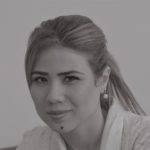
The four-year prison sentence handed down to Olfa Hamdi raises a pressing question: Why is the leader of a political party, a civilian, being tried before a military court? And why are statements made by opposition figures and journalists, along with the activities of lawyers, being brought before a judicial system whose jurisdiction is supposed to be limited to military matters?
On October 21, 2026, a military court sentenced Olfa Hamdi, leader of the Third Republic Party, to four years in prison, comprising two separate two-year sentences, and imposed fines totaling 80,000 Tunisian dinars, according to her lawyer, who spoke to Reuters. The charges included conspiracy against state security and inciting military personnel to disobey orders.
Hamdi was arrested at Tunis-Carthage Airport in February 2026 upon returning from abroad, after statements in which she criticized President Kais Saied’s rule and called for a transitional government and early presidential elections.
This case’s significance goes beyond the identity of the person convicted. It is part of a broader pattern that has expanded since July 25, 2021, involving journalists, members of parliament, lawyers, and activists. Despite the differences between these cases, they all raise the same fundamental question: What justifies trying civilians before military courts?
When Speech Becomes a Military Matter
The practice of trying civilians before military courts did not begin with the measures announced by Kais Saied in 2021. Tunisian law had already allowed for such trials, and human rights organizations documented cases during the country’s democratic transition. However, following July 25, 2021, these organizations reported a sharp increase in the use of military courts to prosecute civilians.
In November 2021, Amnesty International reported that military courts had investigated or prosecuted at least ten civilians over the preceding three months. The organization highlighted the cases of Amer Ayad, Abdellatif Aloui, Yassine Ayari, and Slim Jebali as examples of prosecutions linked to criticism of the president. It compared this figure with at least six cases documented by human rights organizations between 2011 and 2018. This comparison reflects documented cases rather than a comprehensive count of all proceedings.
These early cases help explain the shift: existing legal provisions became a means of prosecuting voices participating in public political debate, amid concentrated power and weakening institutional safeguards.
In October 2021, television presenter Amer Ayad and parliamentarian Abdellatif Aloui were arrested after appearing on a television program in which they criticized the president and discussed the powers of then newly appointed Prime Minister Najla Bouden. According to Amnesty International’s review of the broadcast, neither man’s remarks contained incitement to violence or went beyond peaceful political criticism.
In Yassine Ayari’s case, it is important to distinguish between enforcing an earlier military court sentence after his parliamentary immunity was lifted and new proceedings over social media posts he published in the days after July 25, 2021. Those posts led to accusations of insulting the military. Conflating the two proceedings obscures the nature and timeline of each case.
The use of military courts later extended to journalist Salah Attia, who was arrested in June 2022 over televised remarks in which he claimed that the military had refused presidential orders to shut down the headquarters of the Tunisian General Labor Union (UGTT). In August of the same year, a military court sentenced him to three months in prison, according to the Committee to Protect Journalists.
Debates over the accuracy of published information or a journalist’s professional responsibility do not answer which court has jurisdiction. Professional and legal accountability, when justified and accompanied by appropriate safeguards, does not automatically warrant referring a civilian journalist to a military court.
In this context, it is worth highlighting the authorities’ disregard for Decree-Law 115, which regulates freedom of expression, journalism, printing, and publishing. Rather than applying this legislation in cases involving published content, Tunisia’s judicial and political authorities have largely abandoned it in favor of more punitive laws, including counterterrorism legislation and Decree-Law 54, introduced by Kais Saied in September 2022.
The latter has become a powerful tool of repression against journalists, activists, politicians, and even ordinary citizens who express their opinions. Military courts, the focus of this article, have similarly been used to prosecute civilians over their speech.
As for Chaima Issa, a military court handed her a suspended one-year prison sentence in December 2023 over statements concerning the military’s role in the December 2022 parliamentary elections. The charges included inciting military personnel to disobey orders, spreading false information, and insulting the president.
In October 2026, an appeals court ruled in the same case under Decree-Law 54, sentencing her to six months in prison, suspended.
This case is separate from the “conspiracy against state security” case, in which Issa was tried before a civilian court. She is currently serving a 20-year prison sentence in that case.
Lawyers, Too, Before Military Courts
Prosecutions were not limited to media appearances and social media posts. In March 2022, former head of the Tunisian Bar Association Abderrazak Kilani was imprisoned by order of a military court following an argument with security officers who had prevented him from entering a hospital to visit his client, Noureddine Bhiri.
Human Rights Watch described his prosecution over the confrontation, during which he criticized the president, as a troubling step toward restricting freedoms. Beyond freedom of expression, his case raises questions about the protections lawyers need to carry out their duties and gain access to their clients.
In the so-called “airport case,” lawyers Seifeddine Makhlouf and Mehdi Zagrouba faced trial before a military court over an incident dating back to March 15, 2021, when a confrontation broke out with security officers at Tunis-Carthage Airport over a woman who had been prevented from traveling.
Makhlouf, then a member of parliament representing the Al Karama Coalition, was present alongside other lawmakers. At the same time, Zagrouba had arrived to provide legal assistance to the woman, according to the International Commission of Jurists (ICJ). Although the incident took place before July 25, 2021, military proceedings against the lawmakers began after parliament was suspended and its members were stripped of their immunity. Although this case differs from those involving political statements, it raises the same question about military courts’ jurisdiction over civilians.
On January 20, 2023, the Military Court of Appeal increased its sentences, handing Makhlouf a prison term of one year and two months and Zagrouba a sentence of 11 months, along with a five-year ban on practicing law. According to documentation by Amnesty International and the ICJ, the convictions involved offenses including insulting public officials and disturbing public order, as well as assaulting officials in the performance of their duties in Zagrouba’s case.
Amnesty International called for the military court rulings to be overturned, stressing that even when charges involve recognized criminal offenses, this does not justify trying civilians before military courts.
The ICJ also raised concerns about double jeopardy, noting that civilian courts had already examined the incidents and issued rulings. It argued that retrying individuals for the same acts, alongside banning a lawyer from practicing his profession, violated fair trial guarantees and amounted to judicial persecution of the legal profession.
Calling for an independent civilian judiciary does not mean exempting defendants from accountability. Rather, it means ensuring that they are tried before courts with proper jurisdiction, with full respect for the rights of the defense and the principle that no one should be tried twice for the same offense.
The prosecutions also extended to lawyer and former parliamentarian Béchir Chebbi. On November 5, 2021, it was announced that he had been referred to military justice under a decision issued the previous day. The charges included insulting the president and undermining the dignity and morale of the armed forces.
At the time, lawyer Mokhtar Jemaï told Ultra Tunisia that the referral was also linked to Chebbi’s work defending clients before military courts and a complaint he had filed against President Kais Saied.
On February 7, 2022, the Permanent Military Court in Tunis sentenced Chebbi in absentia to eight months in prison in a case involving undermining military morale and inciting disobedience against senior military commanders.
Lawyers Without Borders documented his prosecution under Article 91 in a briefing warning against using military courts to intimidate political opponents and restrict freedom of expression.
Years after the ruling, Chebbi, speaking to Daraj from exile in Paris, says he was the first to warn against what he describes as “military encroachment into political affairs.”
He argues that deploying armored military vehicles outside parliament and the national television headquarters was evidence of a coup. In his view, those who failed to recognize its political significance from the outset either lacked political and intellectual understanding or were complicit in the move, seeking to eliminate their political rival, the Ennahda Movement.
Chebbi adds that authoritarian repression now spares no one. After the imprisonment of Ennahda leaders, it spread across the political spectrum, affecting even some of Kais Saied’s own supporters.
How Does Political Criticism End Up Before a Military Court?
One legal provision documented by human rights organizations is Article 91 of Tunisia’s Code of Military Justice, which covers offenses involving insults against the military and its leadership. Human Rights Watch has explained how statements criticizing the president have become grounds for military prosecution because of his position as commander-in-chief of the armed forces.
This is where the heart of the problem lies: the president exercises political authority that must remain open to public debate, scrutiny, and criticism. When protecting the military institution becomes intertwined with shielding those in power from criticism, citizens face growing risks simply for expressing their opinions.
The question of jurisdiction is also inseparable from that of judicial independence. Amnesty International has raised concerns about the appointment of military judges and prosecutors, as well as the military justice system’s ties to the executive branch, warning that these arrangements undermine fair trial guarantees. The organization has called for restricting the criminal jurisdiction of military courts to trials of military personnel for breaches of military discipline.
Those convicted hold different political views and face different charges, but the right to a fair trial does not depend on whether one agrees with them.
From Amer Ayad to Olfa Hamdi, the military prosecution of civilians for their words and opinions has become a defining feature of Kais Saied’s rule. Saied bears political responsibility for the climate of fear and intimidation surrounding these prosecutions, a climate whose effects extend far beyond the courtroom, forcing journalists, lawyers, and opposition figures to weigh the consequences of speaking out before they utter a word.


